Week of August 11, 2026
Military and Diplomatic Pause to Major Fighting Against Iran

It seems that the United States and Israel are settling into what appears to be a months-long military and diplomatic pause with Iran—and subsequently, both Gaza and Hezbollah in southern Lebanon. Both countries have very important elections in the near future: Israel’s election of a prime minister and the United States’ midterm elections. US President Trump’s advisors have decided that any negotiations with Tehran are unlikely to produce results, so instead of continuing or intensifying military pressure, both the US and Israel decided that a pause is best. There are still sanctions and economic pressure.
The opening of the Strait of Hormuz is still extremely relevant. Israel and the US are watching negotiations between Iran and Oman make an agreement that will allow crude oil and natural gas to leave the region and resupply world markets. The US does maintain that ships passing through Hormuz must not pay transit fees to Iran, and if any fees are paid to Iran, the country will then face US sanctions.
In summary, there are four reasons for the strategic pause that might last until the end of November. The first reason is domestic politics for the US and Israel. President Trump wants to maintain the Republican majority in both chambers of Congress in the November midterm elections, and Israel’s elections for a new government will be at the end of October. The second is that Washington has observed that the Islamic Revolutionary Guard Corps have hardened their negotiation positions because they perceive President Trump as weak with little follow-through on his treats. The third is Iran’s deteriorating economic situation, and by allowing pressure, it can threaten the regime’s stability. Finally, the US and Israel need to rebuild their stockpiles of weapons, which were depleted during the progressive rounds of fighting with Iran.
Please pray for this pause in military and diplomatic action in the Middle East. Please pray for all sides to find peace, which would bring stability to the region.
Twenty-Fifth Anniversary of the Jerusalem Sbarro Terrorist Bombing
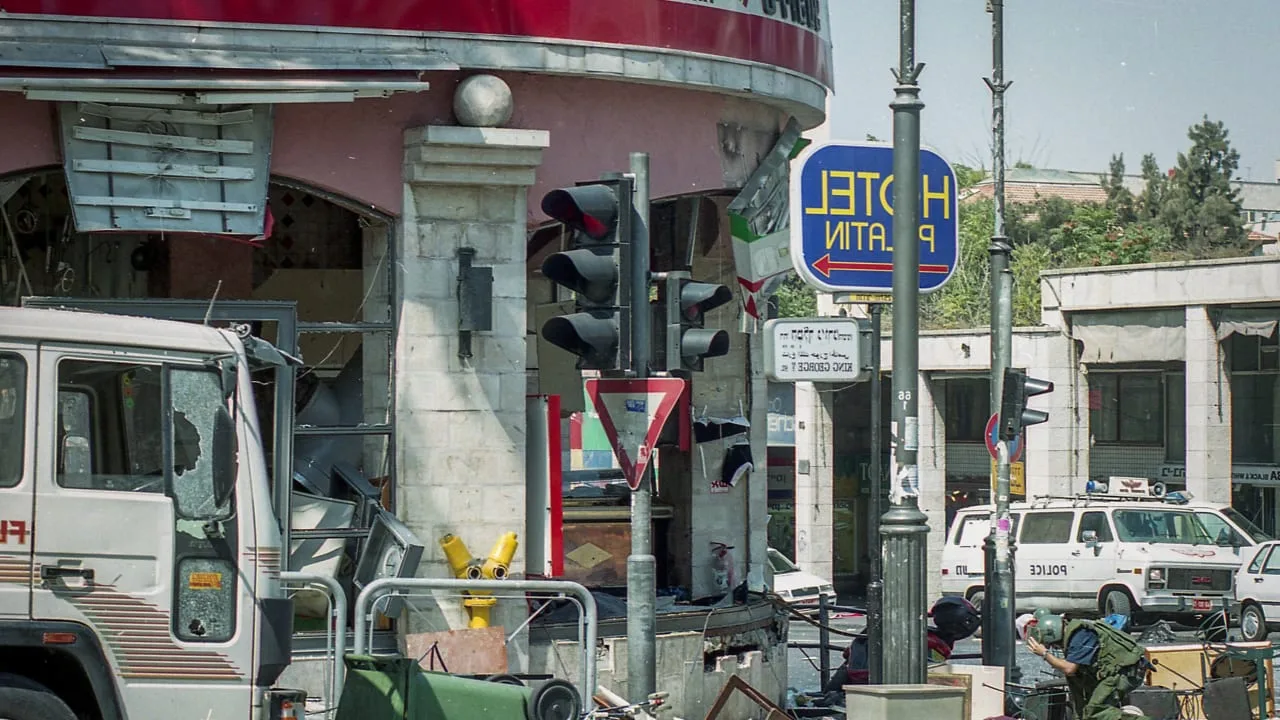
This past August 9 was the twenty-fifth anniversary of the horrific terrorist bombing of the Sbarro pizzeria in central Jerusalem in 2001. The suicide bomber entered the busy restaurant and detonated the pipe bomb, killing 15 people (mostly children) and wounding 140 people. Israel was already on alert during the Second Intifada (2000-2005), a time of violent Palestinian uprising that included widespread suicide bombings and attacks against Israeli citizens. The Oslo Accords signed in 1993 had not brought lasting peace after marking the end of the First Intifada (1987-1993).
The two killers, 21-year-old Ahlam Tamimi and 22-year-old Izzedine El-Masri looked like two modern students, carrying a guitar case packed with 22 pounds of explosives and nails. They crossed the northern Jerusalem checkpoint and made their way toward central Jerusalem. Tamimi was the first female welcomed into the ranks of Hamas terrorists and planned most of the attack. El-Masri died during his attack and Tamimi had fled.
After the explosion, frantic family and friends tried calling each other from all over the city to check in with their loved ones and see if they were safe. This caused Jerusalem’s cellular phone network to break down, adding to the chaos. Tamimi was soon found by Shin Bet (Israel Security Agency) and brought to trial in 2003, where she was convicted and received 16 consecutive life imprisonments. She confessed to all charges but smiled without remorse during the hearings. She was released during the 2011 prisoner exchange for one Israeli soldier, Gilad Shalit, when Israel offered freedom to 1,027 convicted terrorists so he could be returned to his family and country after five years as a Hamas hostage.
Please pray for the families of those who were murdered during this horrific bombing in Jerusalem 25 years ago. Please pray for people’s hearts, minds, and souls as they remember their loved ones who were taken so tragically.
Ancient Grape Seeds Found in the Negev Used to Produce Modern Wine
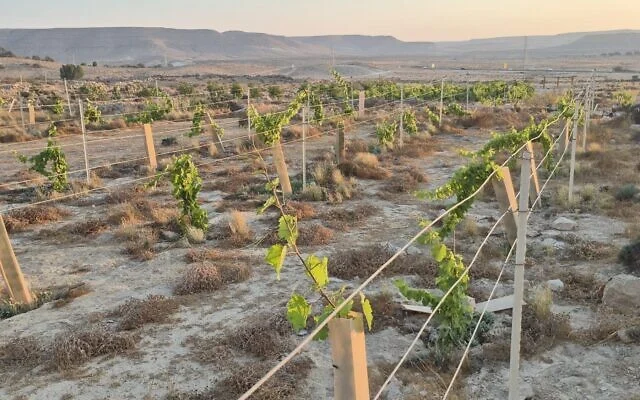
Deep in the Negev desert, well-preserved ancient grape seeds were discovered during an archeological excavation dating back to the seventh century during the Byzantine era. The town was once on the Nabatean trade route and was a stopping point for trade caravans from Saudi Arabia that lead to the Mediterranean. The town of Avdat is located between Beersheva and Mitzpe Ramon, and once was involved in the trade routes of frankincense and myrrh, but by the seventh century, its vineyards and wine presses caused wines produced in the region to become widely sought after.
The desert region only receives three-to-six inches of annual rain, and is not usually a place for agriculture to flourish. With the combined knowledge of the Nabataeans traders and the Byzantines who worked the land, they had collected rainwater and engineered it to hydrate the system of terraces and enriched soil.
The seeds that were found in 2019 were planted in the same terraced soil. Modern drip irrigation was used to water and cultivate the seeds, as the annual rainwater didn’t provide enough water to sustain the seeds. After some time, over 200 grapevines yielded grapes. “The [vines] grew like Jack and the beanstalk, without any disease, without any spraying, and twice as fast as the Chardonnay and Sauvignon vines grown in this area,” said Lior Schweimer Southern District heritage director and archaeologist for the Israel Nature and Parks Authority. Modern equipment was used to extract the juice—not by crushing the grapes with one’s feet—and there were no modern additives like yeast, sulfites, or chemicals added to the bottles.
Wine experts blind tasted the ancient Negev wine, and “they were impressed,” he said. “They couldn’t identify exactly what it was—nobody had drunk it for 1,300 years—but they said it was very balanced, with a bit too much alcohol.” Now the Negev region, though a sandy desert, has been recognized as the Negev appellation: an international wine region known for its ancient soil, climate, and techniques that bear forth ancient wines.
Praise the Lord that the work of people like these informs us on how people in parts of ancient Israel lived and interacted with their neighbors.
Salvation Story from Jerusalem!
Our staff in Jerusalem and around Israel have a very vibrant ministry among Holocaust survivors. There are a few cities the team visits throughout the year where there are clubs of Holocaust survivors who love to meet up, socialize, and stay connected. We bring a spiritual perspective, and many are curious, open, and interested to talk about the Bible, God’s love, and Jesus the Jewish Messiah! It’s been incredible to see and hear their genuine openness over the years, and the fruit of much love and prayer!
Recently, our staff in Jerusalem wrote this: “We also continue our weekly ministry among Holocaust survivors through gatherings, home visits, practical care, worship, and Bible teaching. Recently, “N,” a 92-year-old Holocaust survivor, accepted Yeshua as her Lord and Savior and is now preparing for baptism. Her story is a beautiful reminder that it is never too late for God to touch a heart and transform a life.”
Praise God for this dear woman and others like her who have accepted Jesus as their Messiah. Please pray for her and her growth in faith. Please pray for others like her to be open to accepting Jesus into their lives. Please pray for those who are still skeptical, that they would see the truth!