Week of October 20, 2026
From Captivity to Embrace: A Homecoming to Remember
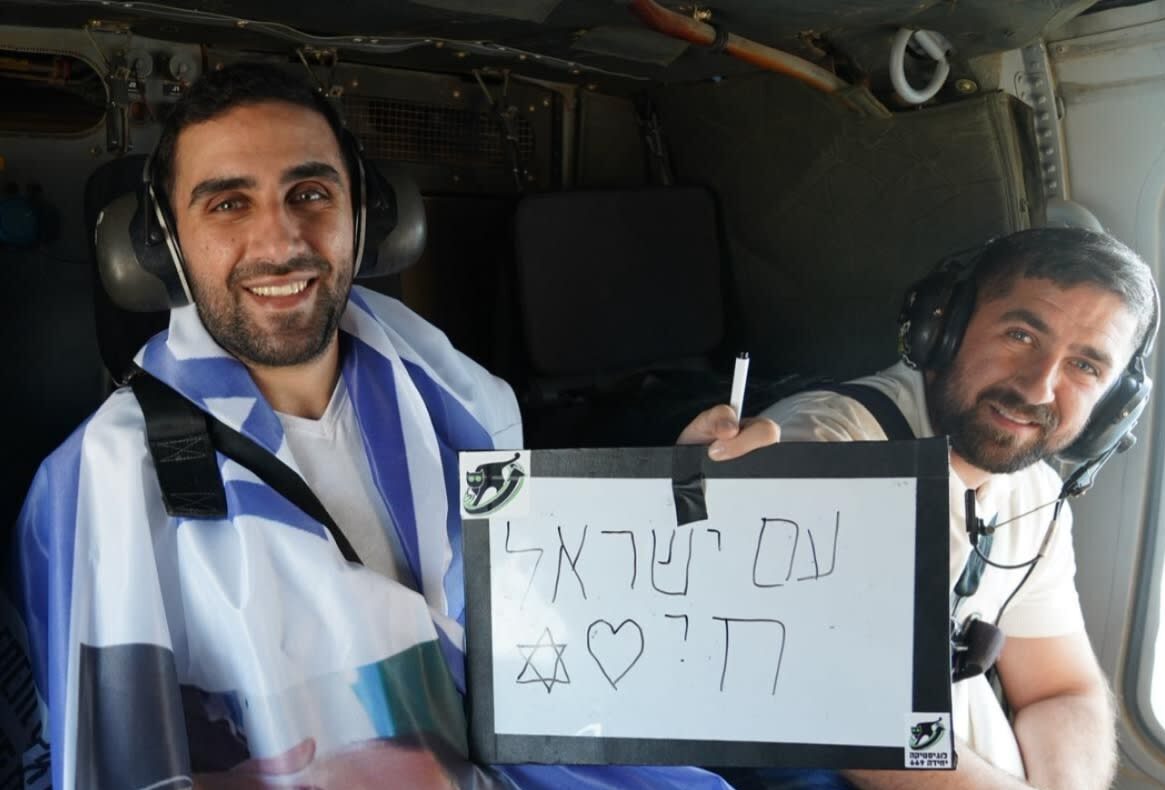
One year ago, on October 13, 2025, after more than two years of fear, uncertainty, and unimaginable suffering, the 20 living hostages held in Hamas captivity in Gaza were finally released and reunited with their families, bringing hope and relief to their loved ones and the world. We remember each of them by name: Elkana Bohbot, Matan Angrest, Avinatan Or, Yosef-Haim Ohana, Alon Ohel, Evyatar David, Guy Gilboa-Dalal, Rom Braslavski, Gali Berman, Ziv Berman, Eitan Mor, Segev Kalfon, Nimrod Cohen, Maxim Herkin, Eitan Horn, Matan Zangauker, Bar Kupershtein, David Cunio, Ariel Cunio, and Omri Miran.
The past year has marked the beginning of a long and painful journey toward healing. While the world witnessed images of tearful reunions, embraces, and celebrations as the hostages returned home, the reality was far more heartbreaking. They came home, but behind the smiles and embraces were bodies weakened by prolonged deprivation with some suffering from severe malnutrition, extreme salt and vitamin deficiencies, profound muscle loss, depletion of essential fats, and the effects of prolonged lack of sunlight. For some, even the process of receiving nourishment again carried life-threatening risks including refeeding syndrome. Others returned with shrapnel wounds to their eyes or injuries to their hands and fingers.
Each survivor faced a unique constellation of challenges, but for all, the journey toward healing will be long and arduous, marked by severe physical and psychological wounds that will require time, specialized care, and steadfast determination as they seek to reclaim their strength, dignity, and hope.
US President Donald Trump welcomed the hostage agreement and traveled to Israel on October 13, 2025, to address the Knesset, Israel’s national parliament, express his support for the ceasefire, and outline his 20-point peace plan for Gaza. His address was a historic moment in US-Israeli relations as he became only the fourth sitting US president to speak before the Israeli legislature. The agreement also provided for a major prisoner exchange: Israel released 250 Palestinian prisoners serving life sentences for murder and terror-related offenses, along with 1,716 Palestinian detainees. Those released were transferred to the West Bank and Jerusalem, while others were deported to other countries.
That same evening, the remains of four murdered hostages, Yossi Sharabi, Guy Illouz, Bipin Joshi, and Daniel Peretz, were returned to Israel for burial, allowing their families to begin the painful process of saying goodbye. In Jewish tradition, burial is approached with great reverence, reflecting the dignity of the deceased and the belief that the body should be laid to rest as soon as possible. Burial in Israel holds deep significance for many, symbolizing a lasting connection to the Land of Israel and its central place in Jewish history, faith, and tradition. The customs of mourning, including the recitation of Kaddish, a traditional Jewish prayer that magnifies and sanctifies God’s name and affirms the enduring presence of faith amid grief and loss, and shiva, the seven-day period of mourning following burial during which family and friends gather to offer comfort and support, provide a meaningful framework for honoring the departed and guiding families through the earliest days of bereavement.
For families who had endured months of uncertainty, the return of the remains of those they had waited so long to bring home offered an opportunity to begin essential mourning rituals and find some measure of solace in finally laying them to rest. Yet the remains of 18 other Israeli hostages continued to be held in the Gaza Strip prolonged the anguish of their families. This painful period of uncertainty finally came to an end on January 26, 2026 when the remains of the last hostage, Staff Sergeant Major Ran Gvili, were recovered and returned to Israel.
Please pray that God’s healing presence will continue to surround the twenty hostages who returned home to their families one year ago, gently mending their wounded bodies, hearts, and souls while restoring their strength, peace, and hope. May the Lord hold them and their families in His everlasting love, guide them on the journey toward healing and wholeness, and transform the pain of their suffering into renewed faith, resilience, and lasting peace.
Ninety-Six New Ambulances Strengthen Magen David Adom’s Lifesaving Capabilities
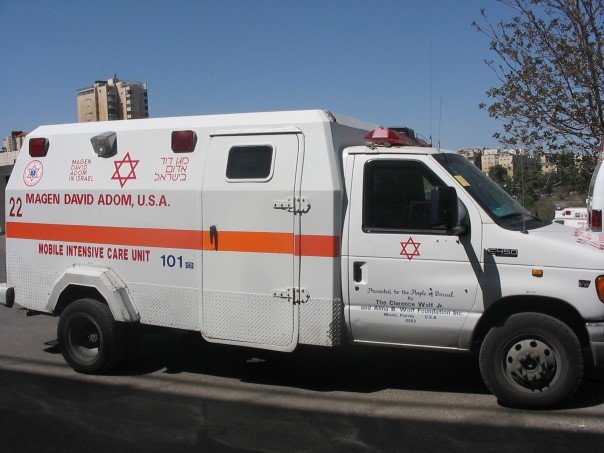
For 96 years, Magen David Adom (MDA), Israel’s national emergency medical service, has been on the front lines of emergencies, delivering lifesaving care wherever and whenever it is needed. From responding to everyday medical calls to confronting large-scale disasters, MDA serves as a critical lifeline for communities across Israel, much like the Red Cross does around the world.
Now, as MDA marks its 96th year, it is celebrating a remarkable milestone with 96 new ambulances donated by supporters in seven countries: the United States, Canada, France, the United Kingdom, Switzerland, Belgium, and Australia. Each ambulance represents more than a new vehicle in the fleet. It is a tangible investment in the people, communities, and emergency responders who depend on MDA when every second counts.
“In its 96th year of operation, Magen David Adom is inaugurating 96 new ambulances, adding to the fleet of approximately 2,000 ambulances already operating throughout Israel to save lives,” said Director-General Eli Bin. In other remarks, he expressed his gratitude to the international donors and MDA’s friends associations for their continued support.
The new ambulances will help expand medical coverage, reduce response times, and strengthen MDA’s ability to respond to both routine emergencies and mass-casualty incidents. As demand for emergency services continues, these additions will help ensure that medical teams are better equipped to reach people in their moments of greatest need.
Nearly a century after its founding, MDA’s mission remains as urgent as ever: to save lives, provide care, and be there when it matters most. With the support of donors around the world, its fleet continues to grow, bringing that lifesaving mission to more people across Israel.
Please pray for Magen David Adom and the dedicated care and assistance they provide to those facing emergencies and life-threatening situations throughout Israel. May they be blessed with the strength, wisdom, and resources to continue delivering life-saving treatment and compassionate care to all those in need.
Israel Faces a Divide Between Drought and Deluge

Across Israel, drought and flash floods are unfolding side by side, revealing a stark water paradox. While the north continues to grapple with a deepening drought, the south and east have experienced an unusually intense season of flash floods. This contrast highlights a critical reality. Even when national rainfall totals approach average levels, they may conceal severe regional water deficits
and growing pressure on the country’s natural water resources.
Data from the Israeli Meteorological Service show that the 2024-2025 rainy season was exceptionally dry. Non-desert regions recorded rainfall equivalent to just 55% of their average annual totals, while northern Israel experienced unprecedented precipitation deficits. Although national totals in 2025-2026 were closer to average, they did not reflect conditions across all regions, and rainfall in the north remained below normal.
To help meet civilian demand amid dwindling water resources, the Israeli Water Authority has increasingly relied on the country’s desalination plants to bolster supplies. Israel’s desalination capacity has also enabled it to provide water to neighboring countries. However, Israel’s reliance on desalination was put to the test in September 2025 when an algae crisis forced the closure of most desalination plants. To make up for the resulting shortfall, authorities had to draw on alternative sources, including the Sea of Galilee and the Coastal Aquifer, to help bridge the supply gap.
The cumulative effect of successive dry seasons and the temporary disruption to desalination has been particularly severe for the Sea of Galilee which fell to its lowest levels in a century over the two seasons.
Yet while northern Israel struggled with persistent water shortages, the south and east experienced a very different problem: an unusually high frequency of intense rainfall events and flash floods. One of the most extreme events occurred on April 27, 2026 when a storm over the Judean Desert and northeastern Negev delivered more than 50 millimeters of rain, much of it within approximately 90 minutes. According to the Israeli Meteorological Service, the intensity of the rainfall near the storm’s center had an estimated return period of at least 100 years.
The intense downpour triggered flash floods across numerous streams, generating record-breaking flows in several locations. In Nahal Tze’elim, near the Dead Sea, the Water Authority’s Hydrological Service recorded a peak discharge of 570 cubic meters per second, the highest since measurements began. Within approximately 30 minutes of the flood’s onset, the water level rose by about four meters. The estimated return period of the peak discharge exceeded 50 years highlighting the exceptional magnitude of the event. Israel’s rainy season typically extends from October through April.
Yechezkel Lifshitz, director of the Water Authority, summed up the disparity: “The recent rainy season clearly illustrates the gap that can arise between national precipitation figures and the actual state of water sources. Even when rainfall approaches the average, water sources continue to bear the impact of the preceding drought year. At the same time, the south experienced an exceptional season in terms of the frequency and intensity of flash floods.”
May the Lord open the windows of heaven over northern Israel and pour out His abundant, life-giving rain upon the land, replenishing the Sea of Galilee, filling the aquifers, and restoring all that has been depleted according to His perfect will. May He extend His divine protection over the areas of southern Israel affected by flooding, restraining further destructive floods and bringing comfort to those affected so that His mercy, provision, and blessing may rest upon the entire land of Israel.
Old Friends, New Questions, and a Shared Sabbath Meal

This past Friday, our Ramat Gan Ministry Center opened its doors for a warm and welcoming Sabbath dinner bringing together 80 people from the local community for an evening of fellowship, celebration, and meaningful connections.
Among our guests was a special group of visitors from Japan, led by our staff serving there. Familiar with the significance of the Sabbath, the Japanese guests joyfully participated in the festive songs and the tradition of sharing challah, a traditional Jewish bread with a distinctive braided shape, often enjoyed during Sabbath meals. The evening also welcomed Israeli friends who had traveled to Japan and were eager to reconnect with the Japanese guests and our staff.
For these Israeli travelers, their time in Japan has become part of a deeper spiritual journey. Since returning home, they have continued to explore spiritual questions, including questions about Jesus, the Jewish Messiah. What a privilege it is to walk alongside them as they seek answers and discover more about faith.
In so many ways, this Sabbath dinner reflected the heart of our ministry. It blessed our Ramat Gan community, created a welcoming space for friends who do not yet believe to experience fellowship, offered a warm gathering place for Japanese travelers visiting Israel, and reunited Israeli travelers with friends they had made while abroad.
Our Ramat Gan Ministry Center was certainly a meaningful gathering place this past Friday. We are thankful for the ways God is at work through these relationships, bringing people together across cultures and creating opportunities for faith to grow. As we share meals, build friendships, and make room for honest spiritual conversations, we pray that each person who walks through our doors will encounter the love of God and become more curious about Jesus, the Jewish Messiah.
It is a joy to see our ministry center serve not only as a place of fellowship, but also as a place where God can plant seeds of faith, deepen spiritual questions, and draw people closer to Himself.
Please pray that the relationships formed and strengthened during this past week’s Sabbath dinner will continue to deepen, creating opportunities for meaningful conversations and lasting connections. May God nurture spiritual growth in each person who attended, draw hearts closer to Himself, and lead those seeking answers to discover Jesus, the Jewish Messiah.