The Jewish People and the Land: A Biblical Case for Israel’s Right to Exist
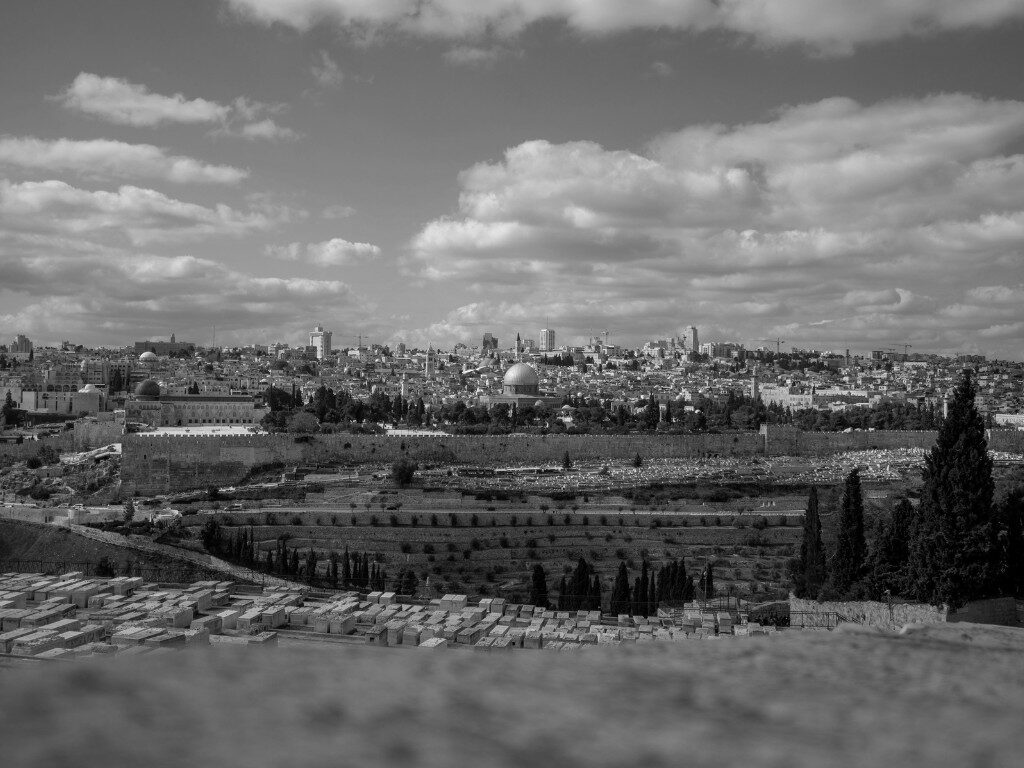
The debate about Israel’s role in God’s plan has persisted for nearly two thousand years and shows no signs of ending. The main question is this: are there solid biblical reasons to believe that Israel still plays a significant part in the story of redemption? Or is it more accurate to see her story as one that has fulfilled its purpose, giving way to a new era of redemption that no longer necessitates the nation’s continued existence?
Perhaps one of the most challenging and politically contentious aspects of understanding the church’s relationship with Israel is the issue of the Land—a specific geographical area. It is this issue that often results in passionate disputes not only among those living in the Land but also among members of the church and around the world: “as soon as the Land of Israel is mentioned an emotive force is released. There are few people, especially in the Christian church who hold a neutral view.”1
While conflicts over land are present everywhere, the issues surrounding the “Holy Land” are somewhat unique, given the underlying biblical considerations that inform the discussion.
The belief in a continued role for the nation of Israel today is rooted primarily in the covenantal promises which God made with Israel. In the Bible, a covenant is an agreement between two parties that typically involves promises, stipulations, and responsibilities. In the Bible, it is vital to understand the covenants God made with different people, as they specify how God has chosen to work through individuals and nations. In practice, they are how God brings his covenantal blessings to the world.
The covenant made with Abraham (Genesis 12:1–3) is the foundational covenant of Israel, and it is crucial for understanding Israel’s role today. It is through these core promises made to Abraham that we can identify the three aspects that are expanded through all subsequent covenants. The promises of the covenant include personal ones to Abraham—that he will be blessed, and his name shall be great; and national ones to his descendants—that they would become a great nation and would be given the land of Canaan as an everlasting inheritance. There is also a universalaspect; through Abraham all the families of the earth will be blessed. The promise of the Land to Abraham forms an essential part of the covenant. Abraham’s descendants (through Isaac and Jacob) were given a specific parcel of Land in these promises, one that would be theirs forever.
In this covenant, we see that God unconditionally commits Himself to ensure that the descendants of Abraham will be as numerous as the stars and that they will inherit the Land of Canaan. Scholar Mark Bailey concludes that “it seems inconceivable to understand Genesis 12:7, 13:14–17, 15:18–19 as anything other than the promise of a literal land to a literal people for a literal time termed forever.” 2The designations of the covenant as “everlasting” (Genesis 17:7) and the land as an “everlasting possession” (Genesis 17:8), given to Abraham and his descendants “forever” (Genesis 13:15), strengthen the case for their ongoing validity. Therefore, we recognise that the covenant made with Abraham is central to the Bible’s redemptive story. This includes not only the promise of a Redeemer from the seed of Abraham but also the everlasting nature of the nation itself. This eternal covenant also guarantees that the Land of Israel remains an everlasting possession of the descendants of Abraham, Isaac, and Jacob. This covenant teaches us that God’s plan for the world includes the nation of Israel, and biblically, it is inconceivable to think of Israel apart from her Land.
There are various ways in which people challenge this biblical truth. One is to argue that the Israel of today differs from the Israel of the Bible; therefore, we do not need to acknowledge or support them. Let’s examine both the present reality and the Scriptures to see if they are connected. It cannot be denied that Jewish people have inhabited the land for thousands of years. It is also historically accurate that, during these thousands of years, they have lived outside the land in what is known as the Diaspora. During this time, they faced immense persecution and mistreatment at the hands of the Gentiles.
It seemed unlikely that Jewish people would ever return to their ancient homeland. Nonetheless, the Scriptures do declare that one day the Lord would bring His people back to this very land from which they were exiled. As we have seen, the prophets indicate that this will happen before the nation turns to the Lord. The prophet Ezekiel stated God’s promise, “For I will take you from the nations, gather you from all the lands and bring you into your own land” (Ezekiel 36:24). The passage continues, “Then I will sprinkle clean water on you, and you will be clean. . . . Moreover, I will give you a new heart and put a new spirit within you; and I will remove the heart of stone from your flesh and give you a heart of flesh” (Ezekiel 36:25–26). It appears that the national salvation occurs after the restoration to the Land!
The prophets also seem to suggest that the restoration will happen in phases. In Ezekiel 37, the Valley of Dry Bones vision, we see this pattern. The bones gradually come back to life: first the sinews on the bones, then the flesh, then the skin, and finally the breath of life (Ezekiel 37:6–10). Afterwards, God tells Ezekiel, “Son of man, these bones are the whole house of Israel” (Ezekiel 37:11). The dry bones represent Israel in exile, hopeless, and despairing. The process of the bones coming together with sinew, flesh, and skin reflects the successive waves of returning Jewish people before Israel’s renewal. This aligns with the waves of Jewish immigration to the Land caused by worldwide antisemitism. The body without breath signifies unbelieving Israel, restored but not yet regenerated. Ultimately, according to this passage, God breathes life into these bodies, symbolising the day when all Israel turns to the Messiah.
Then we learn from the prophets that during this time, the nations would gather against Jerusalem to destroy her: “For I will gather all the nations against Jerusalem to battle” (Zechariah 14:2). This threat will lead to the eventual return of the Messiah to rescue them: “Then the Lord will go forth and fight against those nations, as when He fights on a day of battle” (Zechariah 12:3).
Ask yourself: do the historical facts, especially the rise of a Jewish homeland in the Middle East, align closely enough with the predictions of the Hebrew Bible to establish a credible link? Absolutely, they do! There is no disconnect; the pattern of history and the emergence of the modern state in unbelief is setting the stage for the Day of the Lord and the return of the Messiah when the controversy of Zion will finally be resolved.
Until then, we should be interceding for Israel, longing and praying for their salvation, and combating the lies of the enemy who seeks to destroy them.
- Fred Wright, Words from the Scroll of Fire (Jerusalem: Four Corners Publishing,1994), 9. ↩︎
- Mark L. Bailey, “Should Christians support the Modern State of Israel” in Darrell Bock and Mitch Glaser, Israel the Church and the Middle East: A Biblical Response to the Current Conflict (Grand Rapids: Kregel Publications, 2018) p. 189. ↩︎
| Also published on the Coalition Against Antisemitism (CAAS article). |
Sign up to receive our email newsletters
Get the latest news from Israel, insights from Dr. Mitch Glaser, international ministry reports, as well as videos and podcasts, downloadable resources, discounts in our online store, and much more!