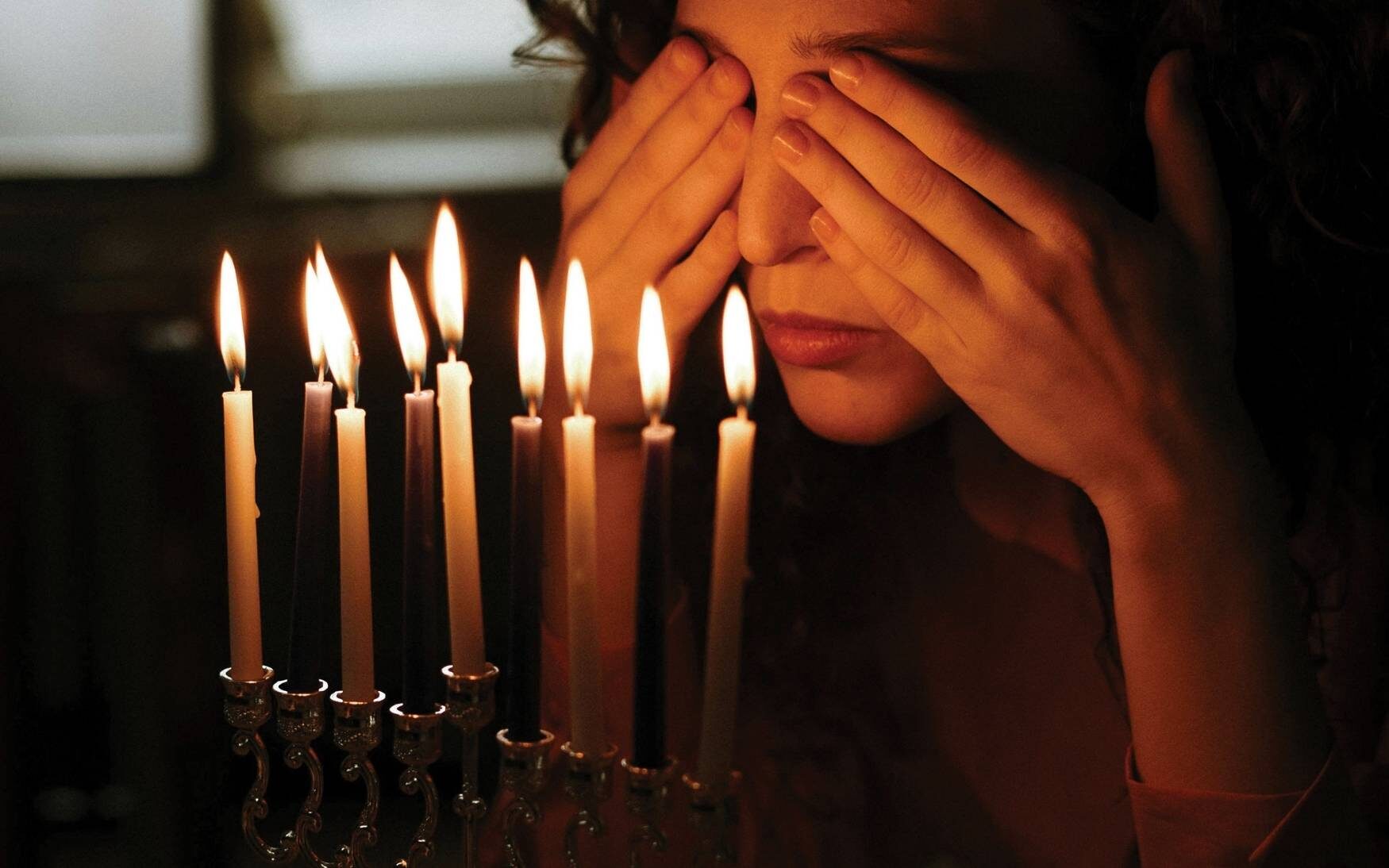
A New Look at the Hanukkah Story
Modern Judaism views the commandment to have no other gods before us and not to create graven images of God as the reason why the very idea of an incarnation is unacceptable to Jewish people. Yet, when the background of the Hanukkah story is understood, we can see why Jesus made one of His most dramatic declarations of His deity on this eight-day Jewish holiday. It was during the celebration of Hanukkah when Jesus made one of the clearest statements about His deity.
Let’s begin by reading the response of the crowd to His statement. Jesus declared,
“I and the Father are one.” The Jews picked up stones again to stone Him. Jesus answered them, “I showed you many good works from the Father; for which of them are you stoning Me?” The Jews answered Him, “For a good work we do not stone You, but for blasphemy; and because You, being a man, make Yourself out to be God.” Jesus answered them . . . “If I do not do the works of My Father, do not believe Me; but if I do them, though you do not believe Me, believe the works, so that you may know and understand that the Father is in Me, and I in the Father.” Therefore they were seeking again to seize Him, and He eluded their grasp. (John 10:30–39)
Have you ever wondered why the Jewish leaders had such a strong reaction to Jesus’s pronouncement? It seems to stretch far beyond a mere theological disagreement—they wanted to stone Him! It is impossible to understand the reaction of the Jewish leaders without knowing the background of Hanukkah.
The Hanukkah Story
The Jewish people retell the story of Hanukkah every year. Though the details never change, it is always a blessing to remember the heroes of our past.
You will not find the story of Hanukkah in the Bible. Instead, it appears in the books of the Maccabees, which are part of the Apocrypha, a collection of writings outside the Protestant canon of Scripture. Jewish people view these books as valuable historical documents but not as important as the Torah, the Writings, and the Prophets. What follows is a summary of the events told in 1 and 2 Maccabees.
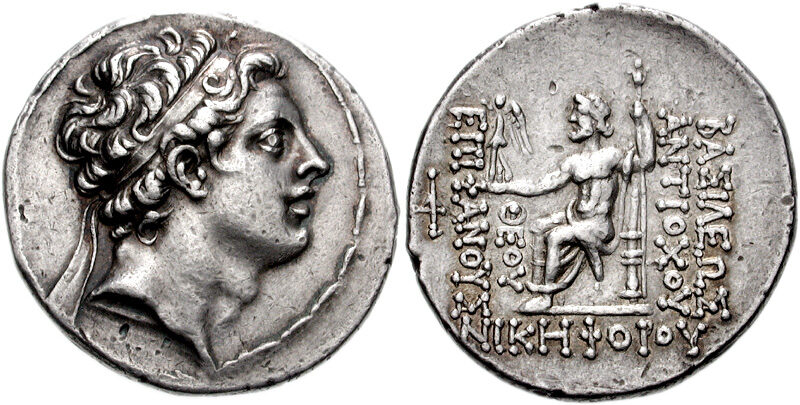
Antiochus IV Epiphanes was a Seleucid king who reigned from 175 to 164 BCE over part of the Greek Empire, which Alexander the Great’s four generals divided among themselves upon his death. Antiochus gave himself the title “Epiphanes” (God manifest), implying he was the “incarnation” of the Greek god Zeus. However, Jewish people called him Antiochus Epimanes, which means “madman,” because of his cruel and erratic behavior.
This polytheistic madman wanted the Jewish people to follow Hellenistic ways and periodically outlawed Jewish worship and practices. Finally, he sent his emissaries throughout Israel along with a portable statue of himself and demanded that the Jewish people bow down and worship him as a Greek god incarnate. But those faithful among the Jewish community could not stomach idolatry and would not bow to the statue of Antiochus Epiphanes!
The Jewish people who lived in a small town called Modi’in led a grassroots rebellion against the Syrian Greeks from 167 to 160 BCE under the leadership of Mattathias, a Levitical priest, along with his son Judah. They were soon given the nickname “Maccabees,” which is a Hebrew word meaning “hammer,” because of the way they struck their enemies. Although the Maccabees fought hard and recaptured Jerusalem and rededicated the Temple in 164 BCE, fighting continued until they finally defeated the Syrian Greek army in 160 BCE.
The recapture of the Temple was a significant victory for the small band of fighters, and they celebrated their miraculous win. Their joy turned quickly to horror, however, when they discovered that Antiochus had sacrificed a pig on the Temple altar. The Maccabees dismantled the holy altar and removed the stones, which they believed to be beyond cleansing. Jewish tradition tells us they heaped the stones into a pile in the Temple area where they would await the coming of a great prophet to cleanse them. Then, they built a new altar.
Jewish Loyalty and the Deity of Messiah
Hanukkah celebrates the victory of faithfulness over idolatry—more specifically, worshiping the image of a man who believed he was the incarnation of a false god. In this instance, it was Antiochus. Jewish spiritual loyalty resisted idolatry and refused to worship the image of a man claiming to be God. As a result, to this day, it is difficult for Jewish people to trust in the Incarnation—God becoming flesh. We must help differentiate between idolatry and truth.
As believers, we accept the Messiah’s deity as true, and we believe its understanding can be found in Isaiah 7:14, and again in chapter 9:6–7. In Micah 5:2, we learn the Messiah was to be born in Bethlehem, whose “goings forth are from long ago, from the days of eternity.” These passages are just a few examples of how the Hebrew Scriptures present unshakable evidence for the deity of the Messiah throughout its pages, though it is difficult for many Jewish people to accept.
This is one reason Chosen People Ministries conducts special Hanukkah services during this season of the year. There is no better time to help our dear Jewish friends and family understand that believing that Jesus is God in the flesh is not antithetical to core Jewish/biblical beliefs. This declaration by Jesus on Hanukkah of His unity with the Father helps us understand that the deity of the Messiah is critical to who He is and what He did in dying for our sins and rising with power over the grave. He is the perfect sacrifice because He is God in the flesh!
Help Us Meet Urgent Needs Now in Israel
One of the ways believers can be a witness to the Jewish people of God becoming flesh is by being the hands and feet of Yeshua. Chosen People Ministries has missionaries around the globe serving the Jewish people in essential ways. When Yeshua saw the Jewish people of His day “distressed and dispirited” (Matthew 9:36), He told His disciples, “The harvest is plentiful, but the workers are few” (Matthew 9:37). The word for “distressed” in this verse means weary, tired, troubled, and harassed. Jesus set His followers in motion to combat these plagues afflicting His people.
Jewish people today, because of October 7 and the rise of antisemitism, are in the same condition now as those distressed and dispirited people in Jesus’s time. As His followers, we are called to action to help God’s chosen people during this time. Though the missiles are no longer falling, and there are no living hostages remaining in Gaza, anyone who has been through a traumatic situation will tell you that the end of the crisis is just the beginning of healing. There is much to do and not enough workers to do it. That is why Your Mission to the Jewish People began the Rebuilding Israel Campaign—not just to repair the physical damage of rockets and Iranian missiles, but to rebuild the lives of those living in the Holy Land . . . physically, emotionally, and spiritually!
The needs are urgent, and the ministry is active. Our current programs include:
- delivering meals and food packages (like oil, flour, and staples) to elderly Israelis, particularly Holocaust survivors
- visiting isolated elderly Israelis and overwhelmed single mothers
- offering housing assistance
- providing biblical counseling, specifically addressing post-traumatic stress from bombings, political turmoil, and personal losses
- distributing Bibles and providing spiritual care
- running Hebrew evangelism campaigns online
“Most of our evangelism happens through relationships,” one staff member explained. “We walk with people over time. They see Yeshua’s love demonstrated through our actions, and then they become open to conversations about faith.”
What Post-Ceasefire Israel Needs
With the peace treaty in place, new questions emerge: What will ministry look like as the war winds down? How will the political divisions and anger over the hostages affect Israeli society? What kind of trauma recovery will be needed?
“We’re planning for intensified needs, not reduced ones,” ministry leaders acknowledged. “When the immediate danger subsides, people begin processing what they’ve experienced. That’s when the deepest questions about God, suffering, and meaning surface. We need to be ready with expanded capacity—more staff, more space, more programs—to meet those needs with biblical truth and compassionate care.”
New initiatives include targeted campaigns addressing adult and child trauma recovery that always point people toward hope in Yeshua. Bible study groups, children’s programming, monthly concerts, and Shabbat dinners are resuming, and plans are underway for expanding them once our ministry is given full facility access.
The Rebuilding Israel campaign launched in September, with a goal of raising three million dollars over the next twelve months. To learn more about participating through one-time or recurring gifts, visit chosenpeople.com/rebuildingisrael or call (212) 223-2252.
- Table of contents
-
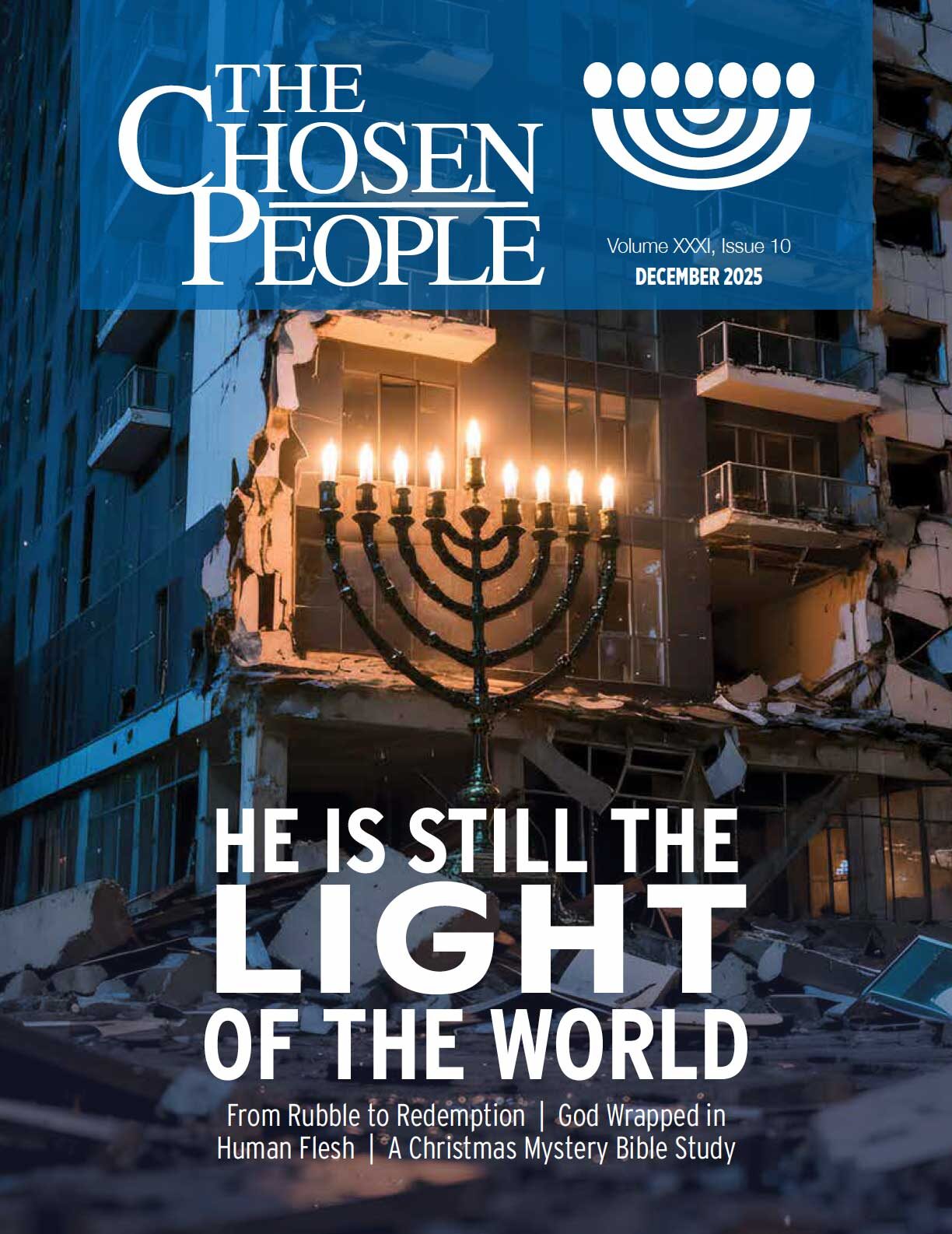
From Mitch's DeskFrom Rubble to Redemption
-
ArticleGod Wrapped in Human Flesh
-
ArticleA Christmas Mystery
-
President's LetterRebuilding Israel After The War
-
-
-
-
-
Ministry News Briefs
Sign up to receive our email newsletters
Get the latest news from Israel, insights from Dr. Mitch Glaser, international ministry reports, as well as videos and podcasts, downloadable resources, discounts in our online store, and much more!