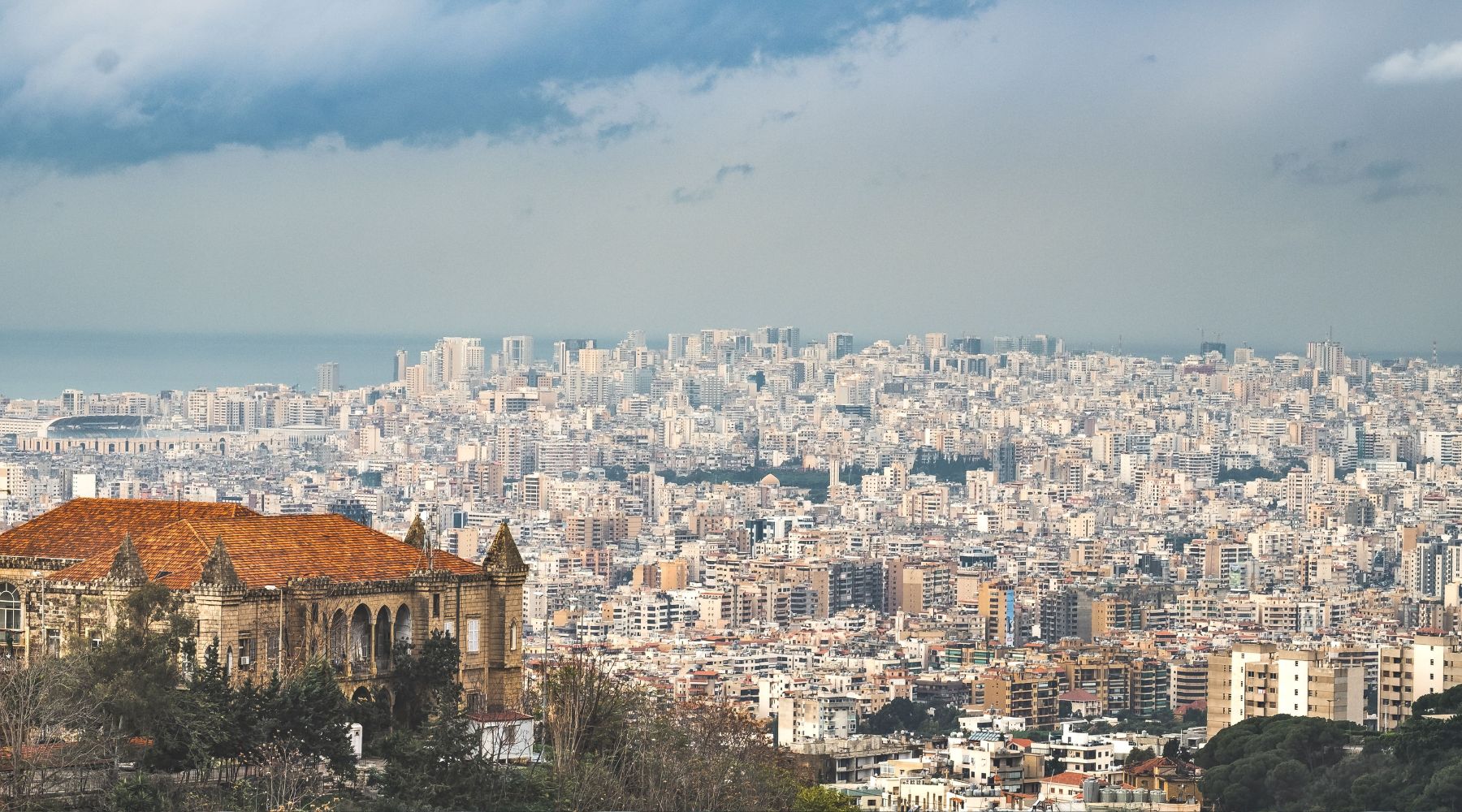
Lebanon and its capital city, Beirut, were jewels of the Middle East for centuries. Beirut emerged from the Ottoman Empire as an exceptional city. According to the New World Encyclopedia, prior to 1975, the country was considered the banking capital of the Arab world and was widely described as the “Switzerland of the Middle East” due to the numerous financial institutions based in Beirut. The city attracted large numbers of tourists to the extent that it was referred to as the “Paris of the Middle East.”
Descriptions of Beirut after the establishment of the State of Lebanon in 1943 attracted the wealthy and famous from all over the world. The success and notoriety of the capital city impacted all of Lebanon. “In the fifties, Beirut entered its golden era. For twenty years, the capital was a center of international trade and regional finance, as well as education, communication, shipping, and transportation.”
Lebanon emerged as a nation within a well-defined set of boundaries, both politically and socially. “Politics in Lebanon is based on a sectarian power-sharing structure created on independence from France in 1943. The constitution guarantees that all eighteen religious sects in the country are ensured representation in government, the military, and the civil service. Reflecting this, the three key government positions of president, prime minister, and speaker must be split between a Maronite Christian, a Sunni Muslim, and a Shia Muslim.”
Prior to the Civil War, Lebanon had been a multi-sectarian country, with Shia Muslims occupying the east and south, Sunni majorities living in the coastal cities, Christians mostly occupying the coastal cities and the mountains, and the Druze population living for the most part in the mountains.
Yet this pearl of the Middle East was cast into turmoil and despair, becoming a symbol of strife and war. All the glory of Lebanon came to a crashing halt with the start of the Civil War in 1975. Fighting between the Lebanese Christian militias and Palestinian insurgents—mainly from the Palestine Liberation Organization—began in 1975 and triggered the establishment of an alliance between the Palestinians and Lebanese Muslims, pan-Arabists, and leftists.
At the root of Lebanon’s troubles lies Hezbollah, the Party of God. At that time, Hezbollah was merely a small fraction of the forces involved. They were a Shia minority based in southern Lebanon and southern Beirut. According to Anastasia Filippidou, a Senior Lecturer in terrorism and conflict resolution at the Cranfield Forensic Institute, Hezbollah was formed as a military arm to project multi-dimensional power. Under President Assad the father, the relationship between Iran and Hezbollah had to pass through Syria for any final decision.
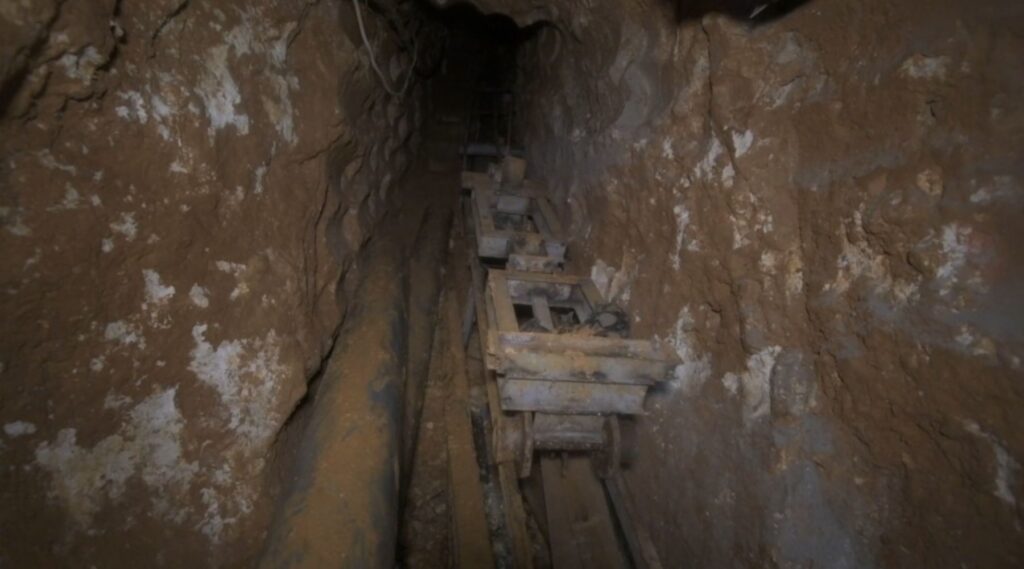
Pictured above: An 80-meter-deep Hezbollah tunnel seized by the IDF
The expulsion in August 1982 of the Palestine Liberation Organization, headed by Yasser Arafat, from Lebanon sent shockwaves throughout the Middle East. The beleaguered people of Lebanon hoped that this might restore their country to normalcy and bring an end to the bloody cycle of violence and destructive civil war. In the void that ensued, Hezbollah emerged as a major influence in Lebanon in the 1990s. Hezbollah rose to significant levels of power even though they were Shia Muslims supported by the Ayatollahs of Iran and allied with the Syrian regime.
With the PLO expelled from Lebanon, it seemed as though peace would be restored and the Israeli military forces in southern Lebanon would soon withdraw. However, Hezbollah assumed the role of “protectors of Lebanon” and opposed the Israeli presence in the south. Hezbollah mounted an ongoing campaign against Israeli forces and carried out a brutal war of attrition. This conflict continued until May 2000, when Israel unilaterally withdrew to the internationally recognized border between the two nations.
Hezbollah portrayed this withdrawal as a victory, and its leaders were heralded as heroes of Islam and defenders of Lebanon. This was an unfortunate historical development that empowered Hezbollah and left Lebanon considerably weakened. The Southern Lebanon Army collapsed shortly afterward, with most officers and administrative officials fleeing to Israel with their families as Hezbollah mounted pressure on the remaining units.
With the Israeli presence removed from Lebanon, Hezbollah faced the challenge of defining itself as the protector of the Lebanese people. Since 1992, Hassan Nasrallah had led Hezbollah and portrayed himself as the guardian of Lebanon. Nasrallah expanded the military capacity of his forces and acquired longer-range rockets capable of striking northern Israel. He was replaced in 2024 by Sheikh Naim Qassem after an Israeli attack killed Nasrallah.
Looking toward the future and its continued relevance, Hezbollah began a hypocritical process of so-called “Lebanonization.” Hezbollah gradually claimed to be limiting its military struggle to Lebanese territory, integrated itself into the Lebanese political system, and established an extensive civil infrastructure.
Hezbollah is a non-state terrorist organization committed to the destruction of Israel, in alignment with its patron, Iran. Hezbollah and its leadership have ruined much of what was good and noble in Lebanon. Since October 7, 2023, and the atrocities committed by Hamas in Gaza, the State of Israel has been on its highest level of alert against Hezbollah. Hamas and Hezbollah share the same destructive ideology, one that culminates in the killing of Jewish people and the annihilation of Israel.
The battle plans that Hamas carried out on October 7 are identical to those found in Hezbollah’s possession several years earlier. In June 2019, Reuters reported that the Israeli army revealed a sophisticated cross-border tunnel originating inside Lebanon and extending nearly a kilometer into northern Israel, reaching depths of approximately eighty meters. The tunnel, discovered near the town of Zarit, was fully equipped with electrical wiring, fuse boxes, and communications infrastructure.
The purpose of such tunnels and the elaborate weapons of war stockpiled by Hezbollah is not the defense of the Lebanese people, but rather death and destruction aimed at the people of Israel. The indiscriminate nature of the terrorism that Hezbollah promotes targets Israeli citizens indiscriminately, whether they are Jewish, Arab, Druze, or foreign civilians.
Immediately after the Hamas attacks on Israeli civilians on October 7, the Israel Defense Forces (IDF) took up defensive positions throughout Israel’s northern border. These defenses included protecting the Mediterranean coast from seaborne incursion and border communities from rocket attacks. The IDF recognized that Hezbollah was both capable of and committed to the same program of death and destruction that had been unleashed upon the communities surrounding the Gaza Strip.
At the time of this writing, more than 96,000 Israelis have been evacuated from their homes along the Lebanese border. The IDF has been on a war footing on the northern border since October 8. A deadly war of attrition between Israel and Hezbollah has continued since that time, and this ongoing cycle of violence could escalate into full-scale war without warning. Such a war, driven by Hezbollah’s destructive agenda, would lead to the deaths and suffering of thousands of Lebanese civilians and an untold number of Israeli citizens, including Jews, Muslims, Christians, and others.
From the perspective of one Israeli pastor from Nahariyya, a city only eleven kilometers from the Lebanese border, war seems both inevitable and perhaps even necessary. The hope and prayer is that Israeli, Lebanese, and international leaders will somehow pull Israel back from the brink. We must also pray for all those who will suffer—that they might come to know the peace of the Messiah Yeshua, who lived and walked in the Galilee.
On April 14, 2026, direct talks between the Government of Lebanon and Israel began—the first direct negotiations since the failed May 17 Agreement of 1983. Conducted under the auspices of the United States, these discussions represented a historic diplomatic opening. Yet the fragility of the situation became apparent almost immediately.
A ten-day ceasefire announced by President Trump had largely stopped six weeks of war between Israel and Iran-backed Hezbollah, but Hezbollah violated the truce almost immediately by firing rockets at Israeli troops in southern Lebanon and launching a drone at Israel. The rocket fire has not been limited to military targets. As recently as May 30, 2026, barrages struck the northern city of Kiryat Shmona, and the Galilee Medical Center in Nahariya was forced to move operations underground amid intensive Hezbollah rocket and drone fire.
Diplomatic efforts have nonetheless continued. Multiple rounds of U.S.-hosted talks have addressed Hezbollah’s disarmament, with Israeli Ambassador Yechiel Leiter noting that despite Lebanon’s assurances, “we have found 8,000 rockets, missiles, and weapons in southern Lebanon. Tunnels and armaments. There are Hezbollah bases in southern Lebanon despite the declarations.”
The negotiations remain tied to broader American diplomacy with Iran, and their outcome will likely determine whether lasting peace along Israel’s northern border is achievable. For the communities of the Galilee, the rockets and sirens are not abstractions—they are the daily reality of life on Israel’s northern frontier.
As Israel marks its seventy-eighth anniversary of independence, the weight of uncertainty presses heavily on every community along the northern border. The talks in Washington may represent the best opportunity for peace in a generation—but peace built alongside continuing rocket fire remains fragile at best. Israelis living along the northern border and throughout the Western Galilee remain deeply wary of the ceasefire. Hezbollah has not disarmed. Its weapons remain intact, and its capacity to resume hostilities at any moment has not diminished. As Israelis observe their annual Memorial Day and prepare to mark the seventy-eighth anniversary of Israel’s independence, there is widespread concern about the possibility of a renewed outbreak of war.
In Israel, there is a saying: “Better a cold peace than a hot war.” These words have never rung more true than they do today.
Sign up to receive our email newsletters
Get the latest news from Israel, insights from Dr. Mitch Glaser, international ministry reports, as well as videos and podcasts, downloadable resources, discounts in our online store, and much more!